Available For Emergencies 24 Hours A Day, 7 Days A Week

Mon-Fri: 07:30am - 4:30pm
Sat-Sun: Closed

Service Plans
View Your Coverage Types

(215) 269-6590
6901 Bristol Pike, Levittown, PA 19057


Cranking Down the Thermostat Won't Cool Your Home Faster
- August 12, 2026
- Blog
- Robaire Company
Contact Information
Call
215-269-6590
Address
6901 Bristol Pike, Levittown, PA
About
We offer 24/7 emergency service to all of our customers. You can always count on the experts at Robaire Company to get to you fast and get the job done right the first time. We use state-of-the-art diagnostic equipment to find the source of your heating and air conditioning problems and fix them fast.

Finance Your Project


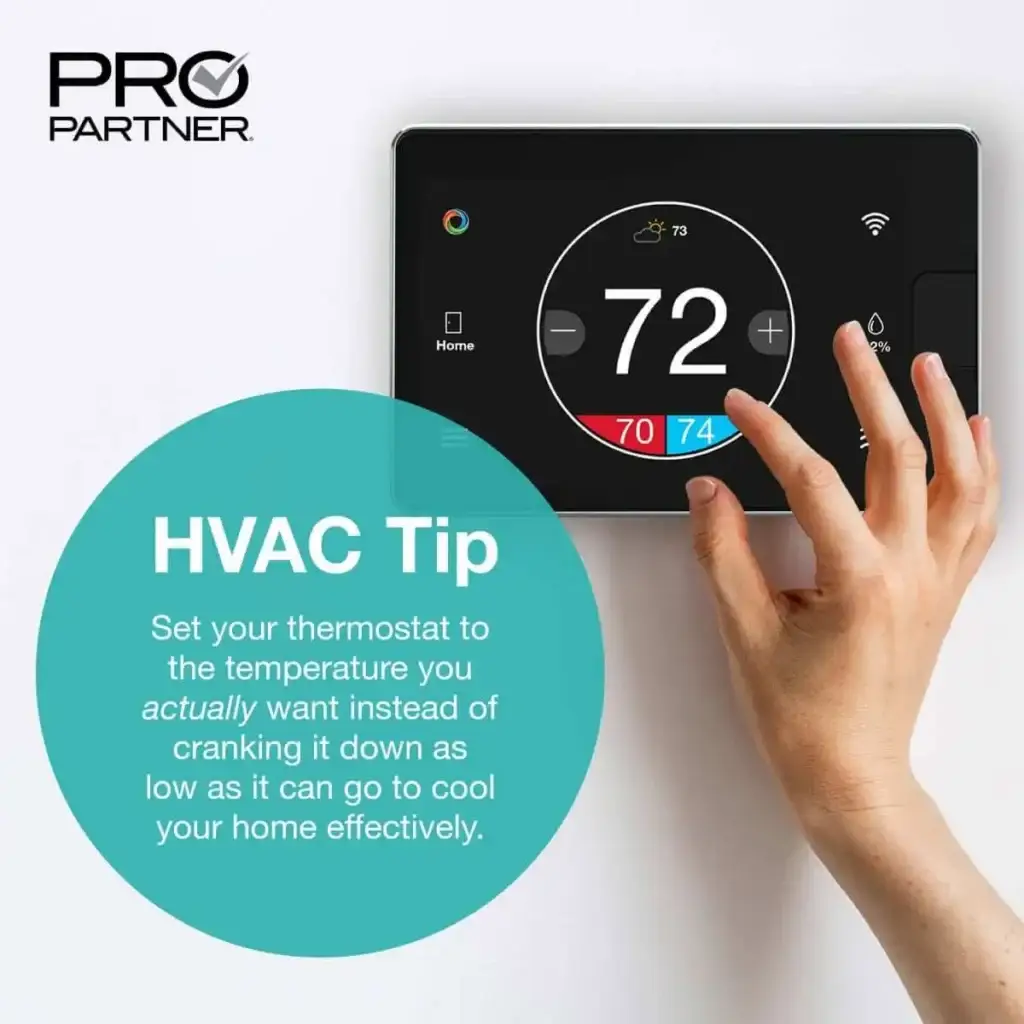
Lowering your thermostat below your desired temperature does not speed up cooling. Air conditioning systems operate at a fixed cooling capacity, meaning they run at the same rate no matter how low you set the temperature. Setting it lower only extends your system’s runtime, increases energy bills, and accelerates wear on your equipment.
Hot afternoon. You walk inside and the house feels stuffy. Your instinct kicks in: crank the thermostat down to 60°F and let the AC blast until things cool off. It seems logical, the lower the number, the faster the cold air comes.
That’s a common misconception, and it’s one worth correcting. Not because it’s a harmless habit, but because it quietly costs you money and shortens the life of your HVAC system every time you do it.
At Robaire Company, we see this pattern regularly. Homeowners who are frustrated that their home isn’t cooling fast enough respond by pushing the thermostat lower. The house eventually gets cold, sometimes too cold and the cycle repeats. What they don’t see is what’s happening inside the system the whole time.
Here’s what’s actually going on, and what you can do instead.
How does your AC system actually work?
Your thermostat doesn’t control how quickly your system cools. It controls when your system turns on and off.
Think of it as a target, not a throttle. When you set a temperature, your air conditioner runs until the indoor air reaches that point, then shuts off. The system doesn’t have gears or speed settings, it’s either running or it isn’t. No matter how low you set the thermostat, the air conditioner delivers cool air at the same steady pace.
A useful comparison: lowering the thermostat is nothing like pressing a gas pedal. It’s more like telling your car’s cruise control to reach a destination ten miles farther down the road. The car doesn’t go faster, it just keeps driving longer.
There’s also a physical limit to how much your system can do. HVAC professionals refer to this as the 20-degree rule: your air conditioner is designed to cool your home by no more than 20°F below the outdoor temperature. If it’s 95°F outside, a realistic indoor target is around 75°F. Set the thermostat to 65°F, and your system runs continuously without ever reaching the target, burning energy and wearing out components the entire time.
Why does cranking the thermostat down backfire?
Setting your thermostat lower than you need produces four concrete problems.
Your energy bills climb. More runtime means more electricity consumption. Your AC isn’t cooling faster, it’s just running longer. Every extra hour of unnecessary operation shows up on your utility bill at the end of the month.
Your system wears out faster. Extended, unnecessary runtime puts extra strain on your compressor, the most expensive component in your AC system. Compressors are built to handle regular cooling cycles — not continuous operation caused by an unrealistic temperature target. Over time, that added stress shortens the compressor’s lifespan and increases the likelihood of mid-season breakdowns.
Humidity becomes a problem. Excessively cold indoor air causes condensation on windows and walls. Left unchecked, that moisture creates conditions where mold and mildew grow. You end up with an air quality problem on top of an energy problem.
Your home gets too cold. This one sounds obvious, but it’s a real source of discomfort. If you set the thermostat to 62°F and forget to adjust it, some rooms will feel like a refrigerator while others stay warm. Inconsistent indoor temperatures are a sign your system is working against itself, not for you.
What's the right way to use your thermostat?
Set it to the temperature you actually want, then leave it there.
That’s the core principle. Your system is designed to reach and maintain a target temperature efficiently. Constantly adjusting the setting or pushing it lower than necessary disrupts that process and forces your equipment to work harder than it needs to.
A few specific practices make a real difference:
Don’t make large temperature swings. If you’ve been away and the house has warmed up, resist the urge to set the thermostat dramatically lower to “cool it down faster.” Set it to your normal comfort temperature and give the system time to work. It will get there at the same rate either way.
Use a programmable or smart thermostat. These devices allow you to schedule temperature adjustments automatically throughout the day, raising the temperature slightly while you’re at work and lowering it before you get home. According to Energy Star, smart thermostats save homeowners an average of 8% on heating and cooling bills, approximately $50 per year. The savings come from eliminating unnecessary runtime, not from cooling faster.
Keep your fan set to “Auto,” not “On.“ When the fan runs continuously on the “On” setting, it pushes moisture that has collected on the evaporator coil back into the air after the cooling cycle ends. Your home feels more humid even though the system is running. “Auto” allows that moisture to drain away properly and keeps indoor air more comfortable.
What else can you do to cool your home more efficiently?
If your home is slow to cool, the problem may not be your thermostat setting at all. There are several things you can do to reduce the cooling load on your system and help it perform more efficiently.
Close blinds and curtains during peak sun hours. Direct sunlight through south- and west-facing windows adds significant heat to your home. Blocking it out during the hottest part of the day reduces the work your AC has to do.
Use ceiling fans correctly. Ceiling fans don’t lower the temperature in a room, they create a wind-chill effect that makes you feel cooler. Set your fans to run counterclockwise in summer for maximum air movement. This allows you to raise the thermostat setting by a few degrees without noticing a difference in comfort.
Avoid heat-producing appliances during the day. Ovens, dryers, and stovetops generate substantial heat. Running them in the evening or early morning, when outdoor temperatures are lower, reduces indoor heat gain and lightens the load on your AC.
Replace your air filter regularly. A clogged filter restricts airflow throughout the entire system. That single restriction leads to weak airflow, longer cooling cycles, higher energy consumption, and if left long enough, frozen coils. Check your filter monthly and replace it when it’s dirty. It’s one of the highest-impact things you can do between professional service visits.
Schedule regular maintenance. A well-maintained system cools more effectively and costs less to operate. Routine service keeps refrigerant levels correct, coils clean, and components functioning as designed. When small issues are caught early, you avoid the expensive repairs that follow a mid-summer breakdown.
Is your system still not keeping up?
If you’ve adjusted your thermostat habits, replaced your filter, and the house still isn’t reaching a comfortable temperature, the problem likely isn’t your settings.
Weak airflow can point to ductwork problems or a blower that isn’t moving enough air. Continuous runtime without improvement often signals low refrigerant levels. Gradual decline in cooling performance over time usually means dirty coils that can no longer transfer heat effectively. These aren’t thermostat issues, they’re system issues, and adjusting the temperature setting won’t fix them.
When something isn’t right, the best move is to have the system inspected rather than pushing the thermostat lower and hoping for a different result.
At Robaire Company, we diagnose what’s actually limiting your system’s performance and fix it correctly. We don’t recommend repairs you don’t need, and we don’t replace a system when a repair will do the job. If your home isn’t cooling the way it should, contact us today to schedule a service call.

Frequently Asked Questions
Does setting the thermostat lower than your target temperature cool the home faster?
No. Air conditioning systems operate at a fixed cooling capacity regardless of the thermostat setting. Setting the temperature lower than your desired level does not speed up cooling, it only extends how long the system runs to reach a target that’s colder than necessary.
What happens if I keep my thermostat set too low?
Running your system at an unnecessarily low temperature increases energy consumption, adds wear on the compressor, and can cause condensation buildup that creates conditions for mold and mildew growth. Your home may also become uncomfortably cold before you adjust the setting back up.
What is the 20-degree rule for air conditioning?
The 20-degree rule states that an air conditioning system is designed to cool indoor air by no more than 20°F below the outdoor temperature. For example, if the outdoor temperature is 95°F, a realistic indoor target is around 75°F. Attempting to cool significantly beyond that range causes the system to run continuously without reaching the target.
What thermostat setting is most energy-efficient in summer?
The U.S. Department of Energy recommends setting your thermostat to 78°F when you’re home and raising it when you’re away. Pairing that setting with ceiling fans allows you to feel comfortable at a slightly higher temperature without increasing your cooling load. According to Energy Star, smart thermostats that automate these adjustments save homeowners an average of 8% on heating and cooling bills annually.
Can a smart thermostat actually make my home cooler faster?
No. A smart thermostat doesn’t change how fast your system cools, no thermostat can. What a smart thermostat does is help you schedule temperature changes in advance, so your home reaches a comfortable temperature by the time you need it, without wasting energy trying to rush the process.
When should I call an HVAC technician instead of adjusting my thermostat?
If your home isn’t reaching the target temperature despite reasonable thermostat settings, if some rooms are noticeably warmer than others, or if your system runs constantly without improving comfort, those are signs of a system issue rather than a settings issue. Contact our qualified HVAC technicians here at Robaire Company to inspect your equipment.
Schedule an Appointment
Contact Robaire Company, Inc.
We offer 24/7 Emergency Service to all of our customers. We also understand the importance of being safe and comfortable in your home. Robaire Company, Inc. is a certified Rheem ProPartner. We are licensed and insured in PA, NJ and DE. Please ask for references. Your comfort… It’s that important!